
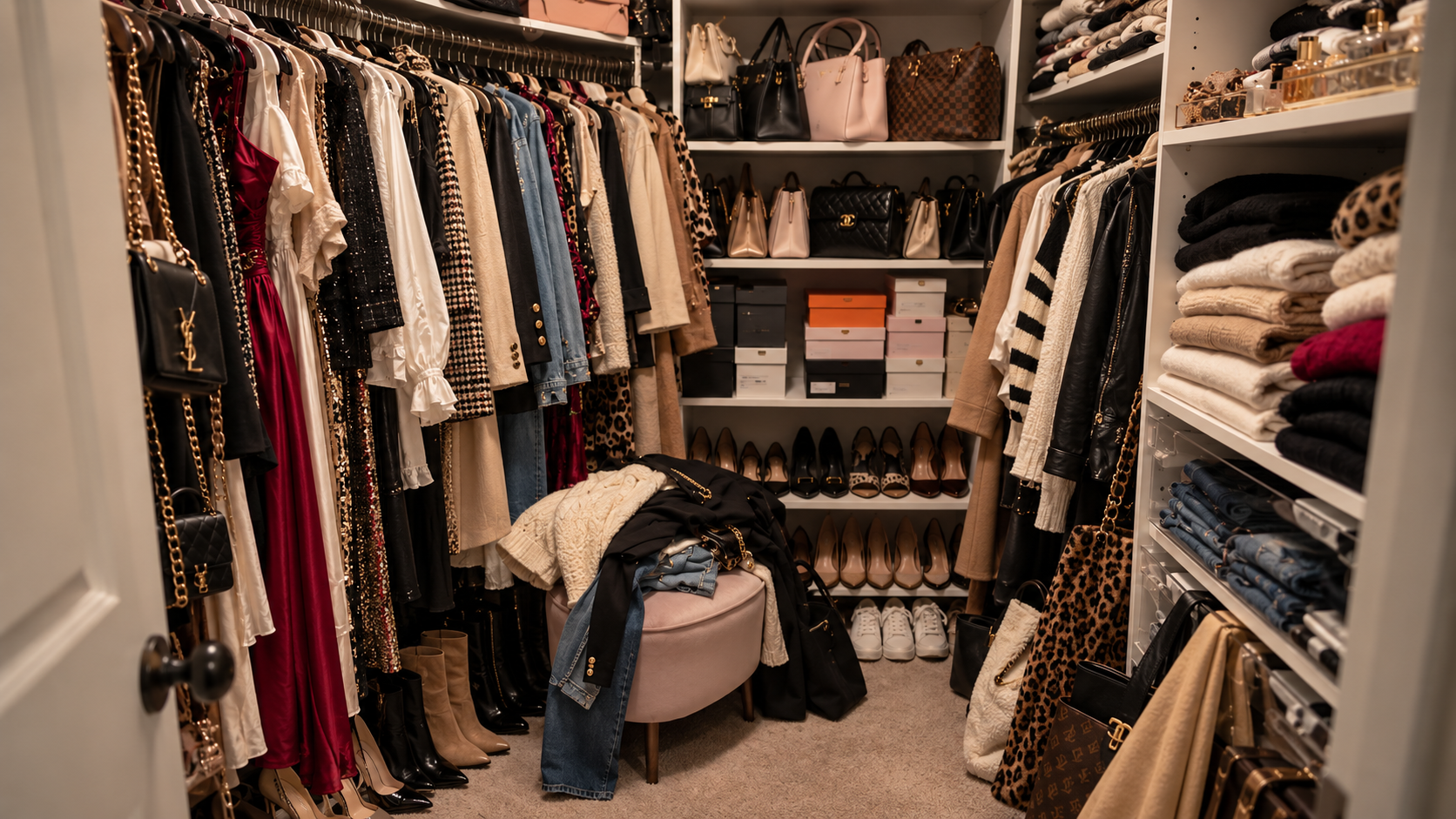
I know somebody has a chair in her bedroom that has not seen an actual person sit in it for months. The chair is doing its best. It is holding the sweater you might wear again, the bag you meant to return, and a few things that somehow became permanent residents. At this point, sitting down would require a small relocation effort. If you have that chair, you are in good company.
Clutter has a way of sneaking up on us while we are busy living. We put something down because we need to get dinner started, answer a call, or leave the house. We tell ourselves we’ll deal with it later, and later keeps getting company. Before long, we’re looking around thinking we need another shelf, a bigger closet, or one of those beautiful storage systems that promises to make us a completely different woman by Saturday.
Sometimes we really do need better storage. Sometimes we need help sharing the work of keeping a home. And sometimes, before we buy another container, it helps to ask what we’re trying so hard to make room for.
Because some of what we’re keeping belongs to a life we have already lived.
There are the clothes from a different season of our bodies. The supplies for the business idea we were excited about three years ago. The gift from someone we love that has never quite felt like us. The things we bought because we thought we would become the kind of woman who used them. None of that makes us foolish. We were living, hoping, trying, and making choices with what we knew at the time.
But we are allowed to check whether those choices still fit.
That can be surprisingly tender. A dress can become a reminder of when we felt especially beautiful. A box of supplies can feel like evidence of a promise we made to ourselves. Giving something away may bring up a little sadness, even when we know we don’t want it anymore. We can respect that feeling without letting it make every decision. Keeping an object is one way to honor a memory; telling the story, taking a photograph, or saving one meaningful piece can honor it too.
A kinder place to begin is with this question: “Does this help me live the life I have now, or the life I actually want to make room for?”
Notice the word actually. We may imagine ourselves hosting twelve people for elaborate dinners, while the gathering we would truly enjoy is three friends, something easy to eat, and a good conversation. We may keep a wardrobe for a schedule we no longer have while struggling to find something comfortable for the places we go every week. Our homes can keep preparing for an imagined version of us while the woman living there today has nowhere to put her things.
She deserves some consideration too.
Start with one place where a little room would make your day easier. Choose the chair, one drawer, your bedside table, or the corner of the desk where you keep trying to work. Before you touch anything, decide what you want that space to do. “I want somewhere to sit and read.” “I want to get dressed without digging.” “I want a clear place to write.” Now you have a reason for clearing it that feels more personal than simply trying to be tidier.
Give yourself fifteen minutes if that’s what you have. You don’t have to empty the entire closet onto the bed and create a situation you’ll regret at bedtime. Pick up one thing at a time and decide whether it needs to go back where you use it, move somewhere else, or leave your home. A bag for donations and a basket for things that belong in another room can keep you from wandering away halfway through.
When you get stuck, ask what is making the decision difficult. Do you use it? Do you enjoy it? Would you choose it again today? Or are you keeping it because it cost money, someone gave it to you, or letting it go feels like admitting something didn’t work out?
Those reasons deserve a little kindness, but they don’t all require you to keep the thing. The money has already been spent. You can learn from that purchase and be more thoughtful with the next one. You can appreciate the person who gave you a gift without displaying it forever. And you can decide a hobby wasn’t for you without turning it into a judgment about your ability to follow through.
Of course, some things are useful to keep for practical reasons, especially when replacing them would be difficult. You get to consider your circumstances. This is your home, and you don’t need to follow somebody else’s rule about how many items a woman should own.
For the sentimental things, give yourself options. Keep the letters in a place where they’re protected. Choose a few pieces of your children’s artwork that you especially love. Photograph something before giving it away if the image will hold the memory you want. If you aren’t ready to decide, place it in a small “come back to this” box and choose a day to revisit it. You are allowed to move gently. Every object does not need an answer this afternoon.
Then finish the small job you started. Put the things you’re keeping where they belong. If you have a donation bag, choose when and how it will leave, so it doesn’t become the next permanent resident beside the door. Clear enough space to use the chair, open the drawer comfortably, or sit at the desk. Let that count.
And once you have made room, enjoy it before you fill it again.
Sit down. Read a few pages. Get dressed with a little less searching. Notice whether that small change makes part of your day feel easier. You may discover that you don’t miss what you moved out nearly as much as you enjoy what the space now allows you to do.
A home can carry our history and still respond to who we are today. We can keep the beautiful reminders, the useful things, and the belongings that make us feel at home. We can also release what has become a quiet obligation. There is room for both gratitude and a fresh decision.
Maybe you’re ready for another corner next week. Maybe getting your chair back is enough for now. Either way, you have paid attention to what you need and made a little room for it. The woman you are becoming will have places she wants to go and things she wants to try. It’s lovely to let her feel welcome in her own home, too.
CIQ action: Choose one small spot you see every day and finish this sentence: “I want this space to help me ______.” Spend fifteen minutes moving out or putting away what gets in the way of that purpose. Then use the space for something you enjoy. Let yourself experience the benefit before deciding what to tackle next. In your journal, write about how you felt after clearing this space.